1. Basic Cutting Properties of the Material
S235JR is a European standard low-carbon structural steel specified under EN10025-2, featuring excellent adaptability to oxy-fuel cutting with performance similar to domestic Q235B steel, only with stricter control over sulfur and phosphorus impurities.
- Its ignition point is lower than melting point, and iron oxide generated during cutting has good fluidity without cutting obstruction.
- A thin hardened Heat-Affected Zone (HAZ) will form on the cutting edge, which must be ground off prior to welding or machining.
- Compatible equipment: manual oxy-acetylene torches, semi-automatic cutting trolleys and CNC gantry flame cutters, applicable for blanking plates ranging from 6mm to 300mm in thickness.
2. Pre-Cutting Preparation
2.1 Workpiece Preprocessing
- Clear rust, scale, oil stains and paint within the cutting line area; impurities will cause incomplete cuts, dross adhesion and flashback.
- Elevate the steel plate by 10~30mm to leave slag discharge gaps at the bottom and prevent molten slag from sticking to the worktable.
- Mark clear cutting lines; reserve a kerf compensation of 1.5~3mm for CNC cutting to minimize dimensional errors.
2.2 Equipment Selection and Pressure Settings (Universal for Oxy-Acetylene)
Nozzle Matching for G01 Suction-Type Cutting Torch
| Plate Thickness δ |
Nozzle Size |
Acetylene Outlet Pressure (MPa) |
Cutting Oxygen Pressure (MPa) |
| 6~20mm |
No.1 |
0.03~0.05 |
0.30~0.40 |
| 20~50mm |
No.2 |
0.04~0.06 |
0.50~0.70 |
| 50~100mm |
No.3 |
0.05~0.07 |
0.80~1.00 |
| 100~200mm |
No.4 |
0.06~0.08 |
1.00~1.30 |
| 200~300mm |
No.5 |
0.07~0.09 |
1.30~1.60 |
Mandatory Equipment Inspection
- Oxygen and acetylene cylinders shall be fixed upright with a minimum spacing of 5m between them and a distance of over 10m from open flames.
- Install flashback arrestors on pipelines and inspect for gas leakage.
- Ensure no blockage or deformation on cutting nozzles. Test oxygen flow: high-pressure oxygen jet shall be straight cylindrical without divergence.
3. Core Flame Adjustment Specifications for S235JR
- Recommended flame type: neutral flame (primary choice) or slight oxidizing flame. Carburizing flame is strictly forbidden, as it causes carburization leading to edge hardening and cracks. Ignition sequence: slightly open acetylene valve → ignite gas → slowly turn on preheating oxygen, adjust until clear blue-white flame core forms without black smoke or acetylene feather edges.
- Nozzle height: 1.5~2.5mm from the tip of flame core to the plate surface; avoid contact or excessive lifting.
- Preheating standard: heat the starting point to bright cherry red (approx. 900°C); 3~8 seconds for thin plates, 15~25 seconds for medium-thick plates over 30mm.
4. Standard Oxy-Fuel Cutting Operating Procedures
4.1 Edge Initiated Cutting (Conventional Blanking)
- Align the perpendicular cutting nozzle with the cutting start point and preheat steadily until the area turns bright red.
- Fully open the cutting oxygen valve gradually; proceed only when molten slag sprays downward from the plate bottom to confirm full penetration.
- Move the torch at a constant speed for continuous cutting:
- Thin plates (≤20mm): tilt torch forward by 5°~10° to increase cutting speed and prevent upper edge melting collapse.
- Medium-thick plates (20~100mm): keep torch perpendicular at 90°.
- Thick plates (>100mm): tilt torch backward by 10°~15° to ensure synchronous cutting on lower edges and reduce drag lag.
- Cutting termination: tilt the torch opposite to cutting direction, fully penetrate the plate bottom in advance for neat, gap-free finish cuts.
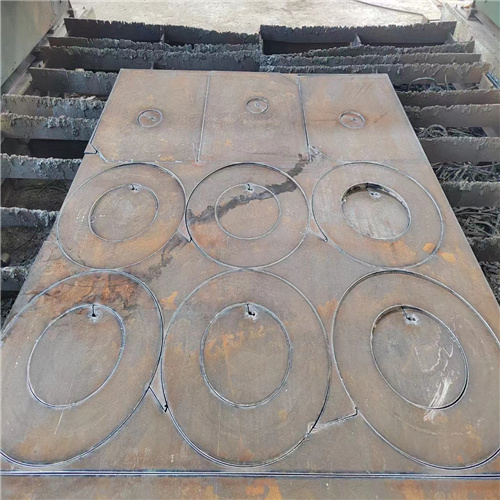
4.2 Internal Hole Piercing for Inner Contour Cutting
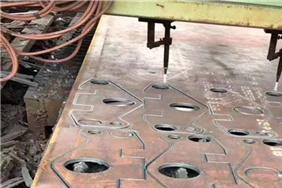
- Preheat and pierce a hole 5mm away from the part outline on excess material.
- Boost cutting oxygen flow; shift the torch to the formal cutting line only after full slag penetration, then cut along the contour.
4.3 Standard Flameout Sequence (Flashback Prevention)
Close cutting oxygen valve first → preheating oxygen valve → acetylene valve. Shut down cylinder main valves and release residual pipeline pressure after long shutdowns.
5. Oxy-Fuel Bevel Cutting Method for S235JR (Pre-Welding Bevel Preparation)
- V-groove with root face (most commonly used) Step 1: Cut vertical straight edges with perpendicular torch, retaining a 2~4mm root face. Step 2: Tilt the torch to the designated bevel angle (30°/35°/45°), cut inclined surfaces at uniform speed along marking lines. Increase oxygen pressure by 0.1MPa and reduce cutting speed by 20% compared to straight cutting.
- Mass bevel machining: adopt semi-automatic cutting machines equipped with angle roller brackets to guarantee consistent bevel angles.
6. Reference Cutting Speeds (Oxy-Acetylene, Neutral Flame)
| Plate Thickness |
Manual Cutting Speed (mm/min) |
CNC/Semi-Automatic Cutting Speed (mm/min) |
| 10mm |
400~500 |
550~700 |
| 30mm |
250~350 |
350~450 |
| 60mm |
150~220 |
200~300 |
| 100mm |
80~130 |
120~180 |
Speed judgment criteria: sparks of molten slag eject vertically downward. Forward drifting sparks indicate excessive speed (incomplete cut, heavy dross); backward accumulated slag signals overly slow cutting (oversized rounded upper edges).
7. Common Cutting Defects & Improvement Solutions for S235JR
- Oversized rounded, melted upper cutting edges Causes: Excessively strong preheating flame, slow cutting speed. Solutions: Reduce preheating flame, increase travel speed, slightly lift cutting nozzle.
- Heavy bottom dross & incomplete penetration Causes: Insufficient cutting oxygen pressure, distorted oxygen jet. Solutions: Clean clogged nozzles, raise oxygen working pressure.
- Excess hardness on cutting edges, prone to cracking during drilling or welding Material characteristic of S235JR: hardened heat-affected zone formed by flame cutting. Solutions: Grind off 0.5~1mm hardened layer on edges; low-temperature stress relief tempering for critical thick plate components.
- Thermal warpage & plate bending Solutions: Nest symmetrically, common-edge cutting, segmented intermittent cutting to reduce concentrated unilateral heat input.
- Flashback with popping noise Immediately close cutting oxygen → preheating oxygen → acetylene valves. Cool and clean the nozzle before resuming operation.
8. Mandatory Safety Specifications
- Grease and oil contamination on oxygen cylinder valves is strictly prohibited.
- Acetylene cylinders shall not be laid horizontally during operation; cylinder surface temperature shall not exceed 40°C.
- Equip the cutting area with dry powder fire extinguishers and remove combustibles such as wood scraps and paint.
- High-temperature molten slag from thick plate cutting shall be controlled to avoid igniting flammable ground materials.
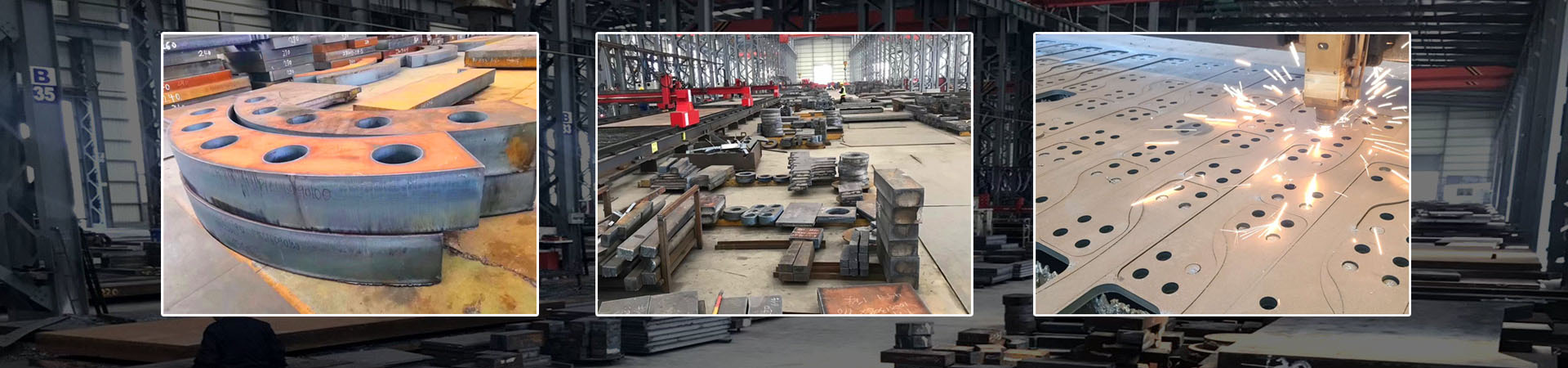
Cutting processing: wear-resistant steel plates (NM360/NM400/NM450/NM500/Mn13), high-strength plates (Q690D/E/S690Q/QL), ordinary plates (Q235B/S235JR), low alloy plates (Q355B/C/D/E/S355JR/J0/J2/K2), carbon bonded plates (45 #, S45C, S50C, bm48c), as well as various special alloy steels from large steel mills such as Wuhan Iron and Steel Group, Liangang, Baosteel, Ansteel, Shagang, Nangang, Hanye, Xingcheng, Yingkou, Ma Steel, etc., as well as Tang Steel, Wenfeng, Ping Steel, etc. The specification is 6MM-500MM thick.
We have good business channels with major steel mills and undertake various types of steel plate OEM processing business. The processing center can cut various supporting materials for engineering machinery, metallurgical equipment, mining machinery, etc. according to customer requirements, such as square plates, circular cakes, flanges, machine side plates, irregular parts, bearing support seats, etc., and process various irregular parts, support seats, machine tool side plates, metallurgical mines, and other supporting materials